How to Import OST to Outlook Accounts ?


In this article, we will find solutions to import OST files into Outlook accounts. Here, we will find out whether there is any manual procedure, as it is claimed, and the best approach to move the files.
Before we dive into the process of importing the files, it is crucial to understand what OST Files are. The OST files are the data files created by Outlook when you are working in online or cached Exchange Mode. The files store a local copy of the mailbox data, allowing you to access the emails, calendar, contacts, and other information even if you are not connected to the server.
Why Do We Need to Import OST to Outlook Accounts?
Yes, we need to know the reason for transferring an OST file to Outlook.
- To Move Orphan OST Files: The first and foremost need is to move an orphan OST file to an Outlook account of a different version. Orphan files are those that are not associated with the parent application.
- Switching to a New Computer: If you want to move to a new computer, you need to transfer the Outlook data, including the OST files. With this, you can move the data to another computer.
- Repairing the Corrupted PST: It is common for the PST file to become corrupted; thus, you might be able to recover some of the files by importing the OST files.
- Migrating to Another Platform: If you want to move to another platform, it is best to migrate the OST files to access your data.
Read related articles: Also, find out the best method to open OST file in Thunderbird.
How to Import OST File to Outlook Accounts?
There is no direct method to import the orphan OST file to the MS Outlook account. It only has the option to import Outlook PST files to the account. Therefore, after many experiments, we are here with some of the free method that could work for you.
Why There’s No Direct Option to Import OST Files into Outlook
The primary reason why there isn’t a direct manual method to import OST files into Outlook is due to their specific nature and purpose.
- Synchronisation with Exchange: OST files are designed to sync with the Exchange server. As we discussed before, they are copies of the mailbox data that are meant to be used while offline or when the connection is unstable.
- Security Concerns: Allowing a direct import of the OST files could pose security risks. It might be possible for unauthorised access to the sensitive data if the file encryption is compromised.
This could be the major reason why there is no direct approach to moving OST to an Outlook account.
Manual Method: Export OST Data to PST and Import It
The free method works only if the OST file is linked to the active Outlook profile. Outlook does not have a direct import option for OST files; therefore, you need to export the data to PST and then import the PST file into the required account.
- In classic Outlook for Windows, go to File > Open & Export > Import/Export.
- Choose Export to a file > Outlook Data File (.pst), select a mailbox, tick Include subfolders, and save the PST file.
- Open the target Outlook account, go to File > Open & Export > Import/Export > Import from another program or file > Outlook Data File (.pst), and select Save PST.
Limitations: It does not work for orphan, corrupted, or inaccessible OST files, and it can be slow for large mailboxes. Outlook for Mac does not export the files to PST format.
Expert Method to Import OST to Outlook Directly
Try using the OST File Converter to move the OST file directly to the Outlook account. With this, you don’t have to consider using any additional steps to work on the migration. The toolkit has a direct option in Outlook to move any type of OST file to the account.
How to Import OST Files to Outlook Account in 4 Steps?
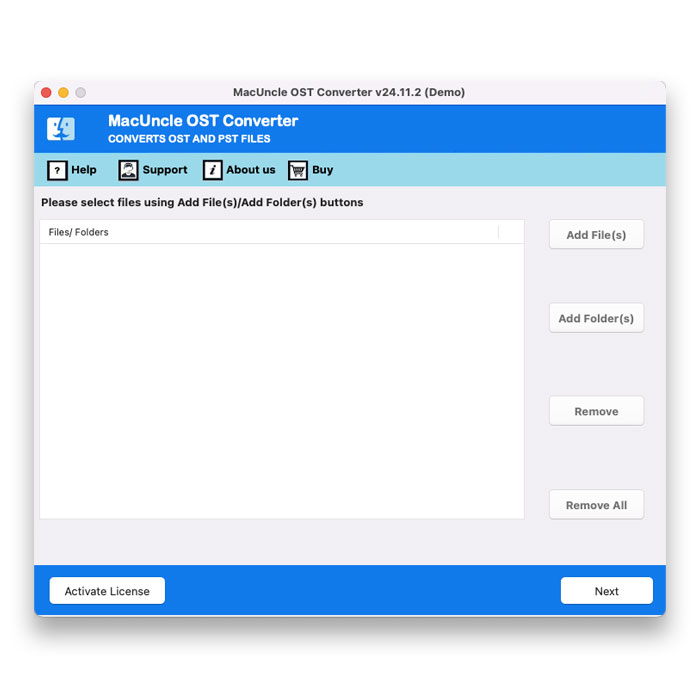
- Launch the software to import OST files to Outlook.

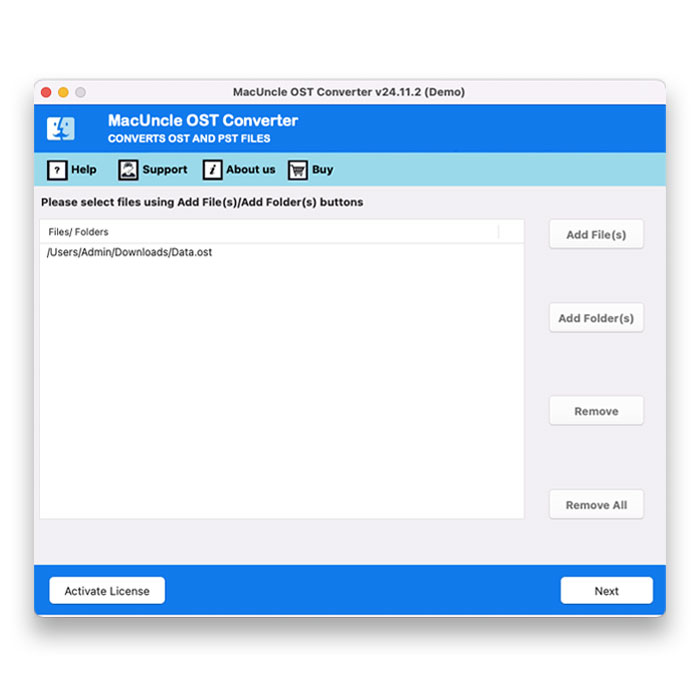
- Add the OST file to the interface. Press the Next button.
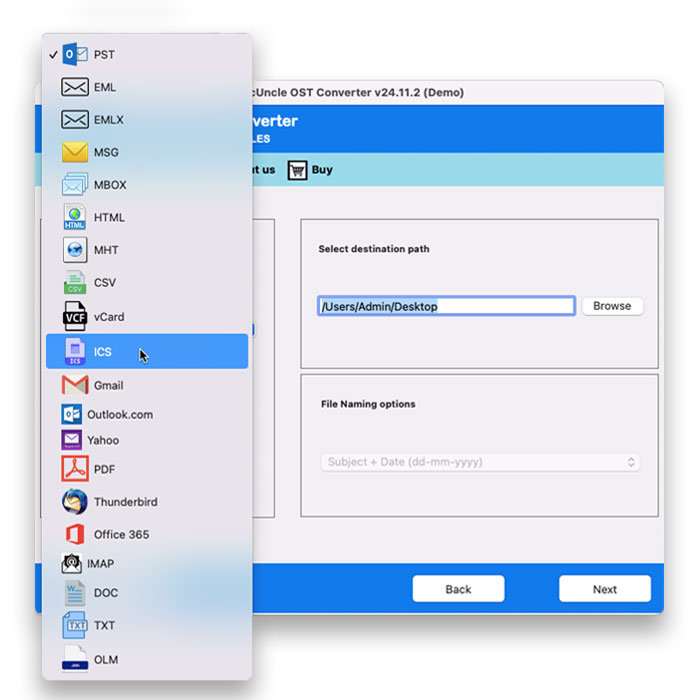
- Further, choose Outlook as a saving option.
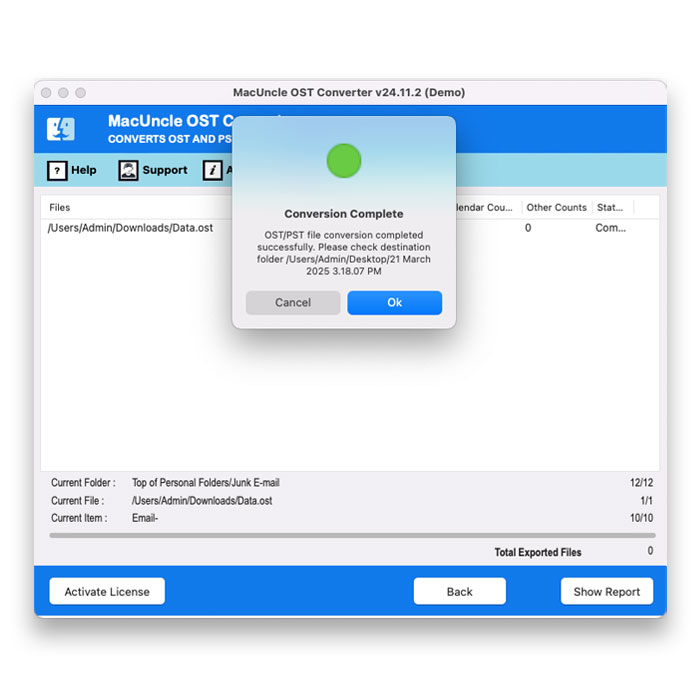
- Press the Export button to start the procedure.
How Can I Move Only the Desired Files from the OST to Outlook?
With the above-mentioned software, after adding the files to the software interface, the user has the option to choose a specific folder or items within the OST files. This allows granular control over the data migration. The software interface offers an option to preview the folder with the OST file before migration. It will let you help to migrate the OST file to any version of Outlook accounts.
FAQS
Q) Why would I need to import OST to Outlook?
A) If you want to switch between computers, migrate to a new profile, or even recover lost data, it is a great option to import the OST files to Outlook.
Q) Is it possible to move the OST file to Outlook?
A) There is no direct method offered by the Outlook application to import OST files. It only has the option to import PST files.
Q) Can I convert the OST file to PST format?
A) To change the file format, you can use the OST to PST Converter. You can convert as many files as you want to the desired file format.
Q) Why can’t I move the OST files to MS Outlook?
A) Outlook does not offer the direct option to import the OST file into Outlook. Thus, the Import from a different program or file only accepts the PST file format.
Q) Is conversion necessary to migrate OST files in Outlook?
A) Yes. First, we need to change the OST to an Outlook-compatible format and then import the files. Otherwise, use the tool mentioned here to skip this step and export directly to Outlook.
Conclusion
We have provided an instant approach to import OST files to Outlook. Since there is no direct approach, we have come up with the fastest and most efficient method. With the software mentioned here, move the OST file directly to the Outlook account. You might find a different approach to importing the OST file to Outlook, but it will all take your valuable time.