Why Is OST File So Large? Find the Best Fixes Here


Microsoft Outlook is a common communication and data managment for business and personal requirements. The Outlook data files are PST and OST. The OST files are created when Outlook is used with the Exchange Server, IMAP, Outlook.com or Microsoft 365. The OST files store emails, calendars, attachments, and other mailbox data items. As the new emails come and sync, it gets accumulated and make the OST files oversize. And these files become so tricky to manage and organise properly. If any one of the file get corrupted, the whole OST file will be affected. Therefore, we will discuss “Why OST file so large? And how to perform the safest approach to overcome this.
There are some common to advanced approaches to deal with the oversized OST files. In the article, we have constructed all the details of what makes the OST files become oversized and then move to the methods to manage the files safely without triggering the important data file.
Why is My OST File so Large? What are the Common Causes
There are several reasons why the OST file becomes larger, here are some of the reasons:
- Large Volume of Emails and Attachments: It would be fair to say that the biggest cause of the ever-growing OST files is, by far, the email attachments. These attachments can be in the form of PDF files, videos, spreadsheets, or presentations. The email folders – Inbox, Sent Items, and Deleted Items – tend to store thousands of messages as time goes by.
- Items are Not Clearly Deleted: If you have deleted unwanted emails from the account to manage the OST file size, but it does not completely resolve the issue.
- Shared Mailbox: All the data from the shared folder is copied to the public folders. If you access via Outlook, it will be downloaded and could increase the size of the OST file.
- Multiple Calendar and contact List: If you have a large calendar with attachments, meetings, etc. It can take up lots of space, making the OST file large.
- Outlook Add-ins and Plugins: Since the third-party add-ins and plugin stores additional cache data in Outlook, it contributes to the file size getting larger and thus increases the performance issues.
- Corruption or any synchronization Errors: If the synchronisation fails, that is, Outlook keeps downloading the emails again and again, and keeps multiple copies of duplicate items, which makes the file so large unexpectedly.
How to Know the Size of the OST Files
- Launch Outlook.
- Go to File > Account Settings > Account Settings.
- Select the email account, and click on Data Files.
- Choose the OST file, and click on Open File Location.
- Right-click the File and select Properties.
It shows the mailbox folder sizes and helps you locate the folders that consume the most space.
What happens when OST files becomes so large? One of the common outcomes of this is the error – “Outlook data file reached maximum size but cannot delete“
How to Fix “Why is the OST file so large”?
The problem of the large file size of Outlook can be resolved by employing the following measures, which are also quite effective for enhancing the overall Outlook functioning:
Delete Unnecessary Emails & Attachments
Go through each of the folders, like Inbox, Sent Items, Delete Items, Drafts, Spam/Junk folder, and manually delete the emails that are stored there. This would fix the issues with the OST file being so large.
Remove large attachments; or, you may want to move them to the local directory, and then take them out of the emails. If you want to make this task simpler, then get the Email Attachment Remover.
Enable Auto Clear
Steps to Enable auto clear delete items:
- Go to File.
- Now, select Options.
- Choose Advanced.
- Under Outlook Start and Exit, enable Empty Delete Items folder upon exiting Outlook.
Manage Cached Mailbox Size
- Go to File > Account Settings.
- Select Account > Change.
- Under Mail, keep offline.
- Restart Outlook.
This removes older items from the OST files but keeps them in the server. This way, you can resolve the issue related to “OST file is large”.
Compact OST Files
You can try compacting the files, as even after deleting the items, Outlook does not shrink the file automatically.
- Open Outlook.
- Go to File > Account Settings.
- Select Email Account > Data Files.
- Then, choose OST File > Settings.
- Click Compact Now.
Archive Old Emails
To fix the “OST file so larger” issue, we can use the archive method. Use the steps below to use Outlook’s Archive Feature:
- File > Tools > Clean up old Items.
- Move items older than 6 months or 1 year to a PST archive file.
Repair OST File
If you suspect the OST file is so large issue is due to corruption, rebuild the OST.
- Close Outlook.
- Then, navigate to the OST file and rename the extension.
- Restart Outlook.
- It create new OST and re-downloads the mailbox
Or use the SCANPST.exe repair tool.
Pro Tip: When OST files grow, the risk of data corruption also increases. To avoid any data loss, it is important to backup OST file regularly
Use the Tool to Fix “Why is the OST File So Large?”
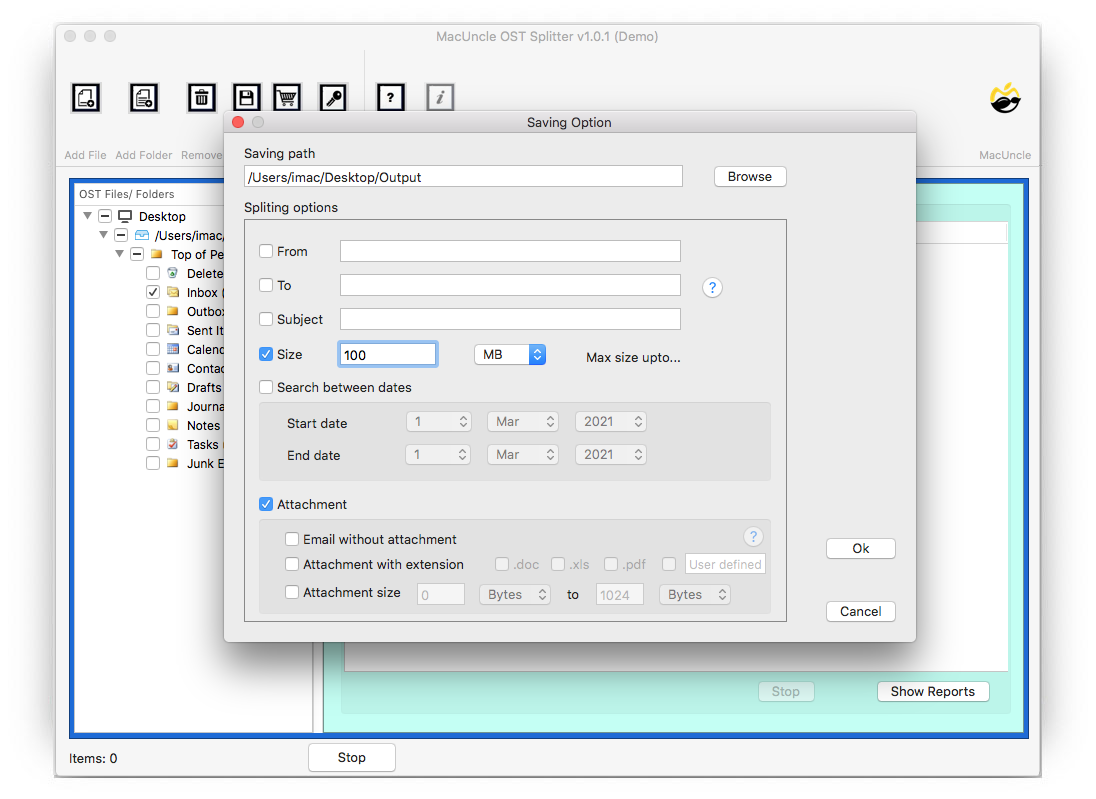
To reduce the size of the Outlook OST files, use the OST File Splitter. As the name suggests, it can split the large file into a desired size for the users. Users can select the size limit they prefer for splitting according to their system performance needs. The tool keeps emails, files, contacts, and other data safe and allows users to access them after the division.
How to Prevent the OST File from Accumulating
- Clean the Mailbox Weekly.
- Remove large attachments from Outlook.
- Compact OST files monthly or in 3 -4 weeks.
- Limit shared mailbox download.
Conclusion
A large OST file usually causes issues with the mailbox size, attachments, cached synchronisations, or unused deleted items. Oversized OST files slow down Outlook performance and lead to corruption. The article has given all the solutions like deleting unnecessary data, limiting cache size, enabling archive settings, and repairing the files when required, significantly reducing the OST size and optimising the Outlook performance.