How to Delete Multiple Files on Mac Permanently at Once?


Looking for a way to delete multiple files on your Apple computer forever? In this article, you will learn how to do this, something that lots of people are struggling with at the moment: delete multiple files on your macOS permanently at once.
Grab the best methods to delete all files on a MacBook Pro and other Mac devices. It is a common thing to clean Mac files as part of recovering storage space. Moving the files or folder to the Trash and emptying the trash is not enough. All the deleted files can be retrieved using any of the recovery tools available on the market, even if you have emptied the trash folder. If you are planning to erase all the Mac files/folders, then a zero-filling or data replacement method is the best.
Benefits of Deleting Multiple Files on Mac
Before we find out the solutions to how, let’s know the benefits of deleting all these unnecessary files.
- Free up the storage Space: The primary motive for this is to free up the space. Especially for the SSD, as it fills up quickly. Therefore, removing duplicate files, old downloads, etc., can dramatically improve the storage space.
- Improve Privacy and Security: Destroying sensitive or outdated financial documents can prevent any unauthorized access if the Mac falls into the wrong hands
- Better File Management: A clean and organised file system is easier to navigate. Deleting unwanted files helps you find the files faster and reduces any digital clutter.
- Improve Application Performance: While modern macOS is good at managing resources, a cluttered hard drive can cause slow performance, which can lead to other applications working slowly. Refer: Why is Mac Mail so slow?
How to Delete Batches of Unwanted Files on macOS
Firstly, let’s see how we can tackle the deletion of files on a Mac.
Pro Tip: Before permanently deleting files, double-check the selected files to ensure you don’t actually delete important data. If there is a need to rename batch of files, then check out the article – how to rename files on Mac for better file management.
With Finder
- Open Finder and locate the files to delete.
- To select multiple files, hold the Command (⌘) Key and select each file.
- After selecting the files, press the Delete key to move them to the Trash.
- Or right-click and choose “Move to Trash” to transfer the files to the Trash Folder.
Via Terminal
Advanced users, you can try the Terminal to delete files permanently from macOS.
- Go to the Applications > Utilities folder and find Terminal.
- Enter cd and the folder to navigate to the directory from which the files need to be deleted.
- Enter rm and the filename to delete a particular file.
To delete files with specific patterns or formats, use the Wildcard command, e.g., rm *.txt, which will remove all the files in .txt format.
With Keyboard Shortcuts
Now, let’s find out how to permanently delete files on a Mac using a keyboard shortcut.
- With Command+Delete, send the selected file directly to the Trash folder after confirming the warning notification.
- Option+Command+Delete will permanently delete the selected files without moving them into the Trash.
Empty the Trash
To delete the files permanently from the Trash, click on the Trash and select “Empty Trash”.
Note: It should be used with caution, as the deleted files cannot be recovered.
Limitations: As easy as it seems, the manual method has inherent limitations. They are time-consuming, are more likely to be human errors, and lack scalability. Repetitive tasks can slow down the process and could lead to mistakes, whereas a large file can overwhelm manual efforts. To overcome any of these limitations, try using the more efficient automated approach once.
Check out the article to know how to delete System Data on Mac OS.
Professional Approach – Permanently Delete Multiple Files on Mac
If you are sure about removing files, then MacUncle Data Wipe is the software. It is the secure file deletion tool for Mac OS machines – Mac mini, MacBook, iMac, etc. Using the advanced erasing methods, delete unused files and folders within the tool itself. The whole process can be carried out using the application without any external procedure. You can also use the steps to show hidden files on Mac and then delete files in batches at once.
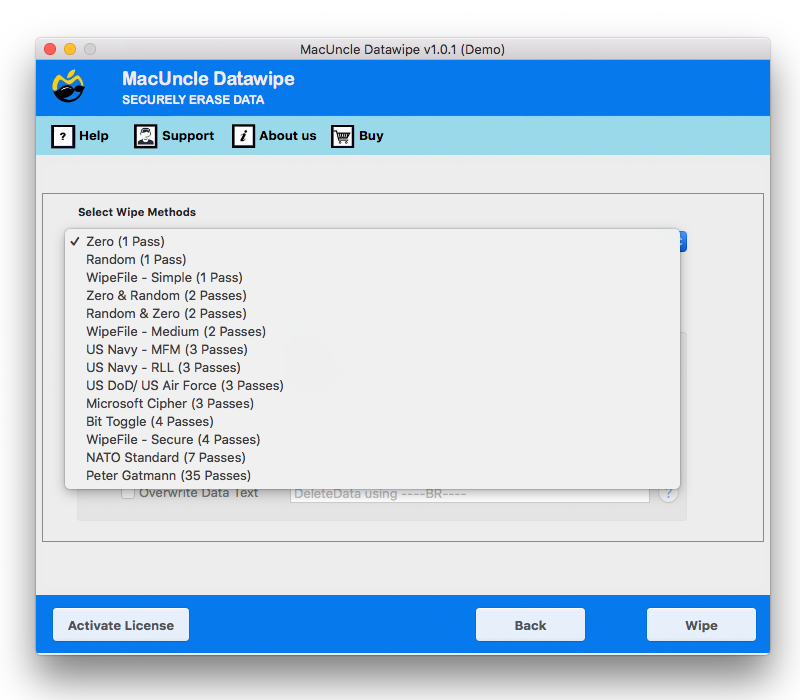
Different File Deletion Methods: Zero (1 Pass); Random; Wipe-File Simple; Zero & Random; Random & Zero; WipeFile Medium; US Navy – MFM; Microsoft Cypher; US Navy RLL; US DoD/ US Air Force; Bit Toggle; WipeFile – Secure; NATO Standard; Peter Gatmann. To learn more about these methods, navigate to the official page mentioned above.
4 Simple Steps to Delete Multiple Files/Folders on macOS at Once
Follow these steps carefully to delete multiple Mac files:
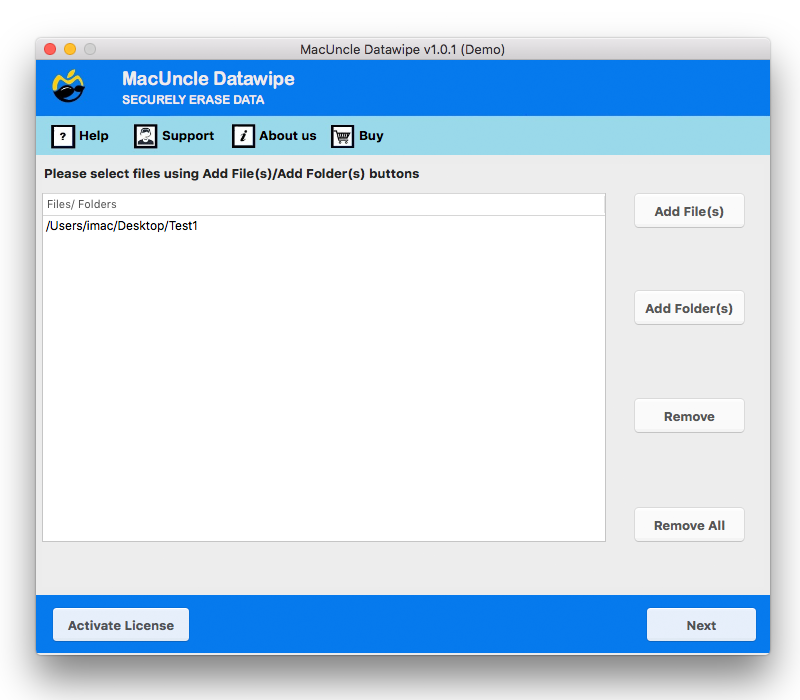
- Add Files using Add File(s) or Add Folder(s). Press the Next button.

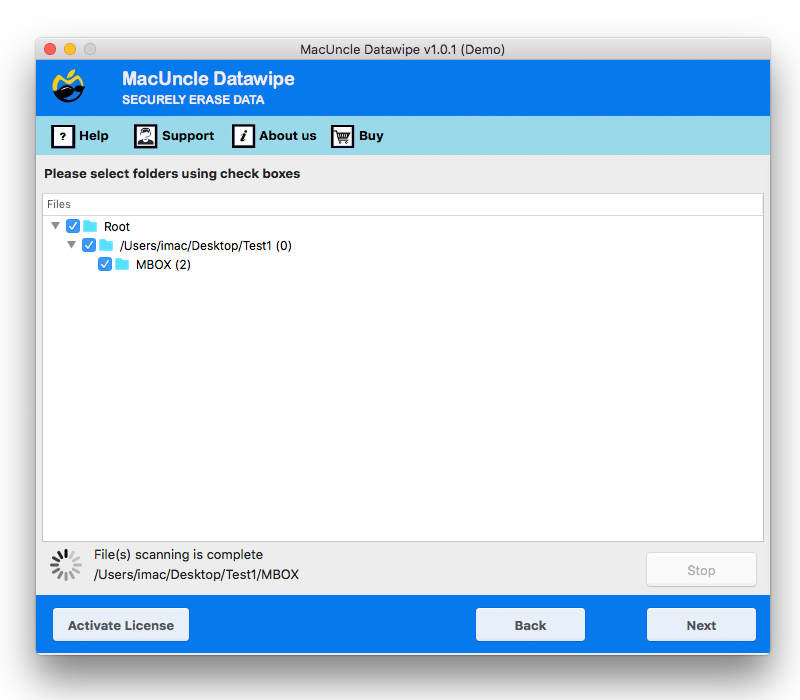
- Check the corresponding box for folders, then click the Next button.
- Further, click Select Wipe Method, then choose a method from the drop-down menu.
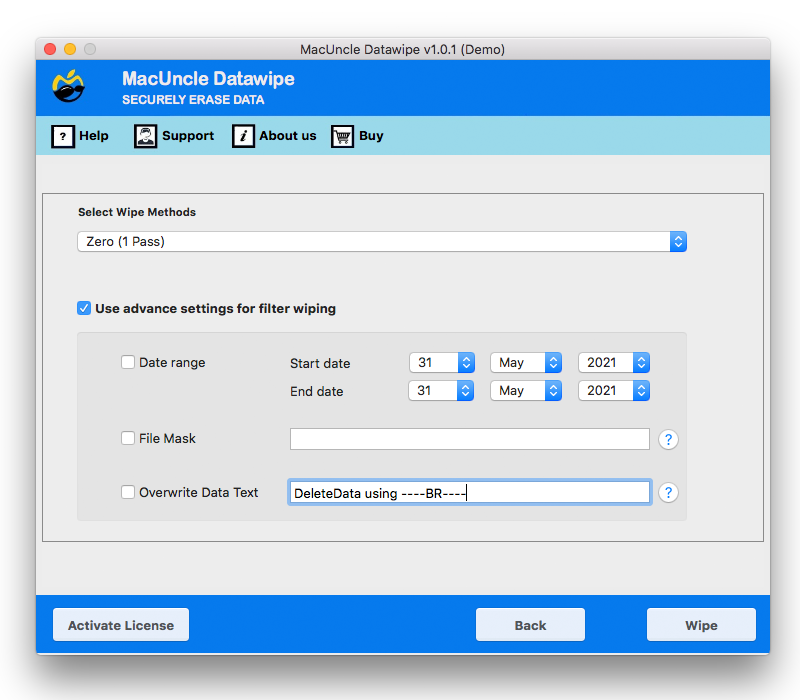
- Use the filter option to delete files at once. Finally, press the Wipe button to initiate the deletion process.
Note: If you ever need to recover permanently deleted files on Mac, here’s how you can do it effectively.
Delete Multiple Files on Mac using the Demo or Pro Version
We have come up with a free trial version to delete files and folders on Mac OS. Delete 5 files of size less than 5 MB as per the user’s requirement without any restriction. Use any method from the tool to erase the data files effortlessly. Consequently, after testing the application, go for the upgraded version with advanced features and perform unlimited deletion of files. Go to the link below to buy the license key.

Use the same tool to securely wipe an external hard drive on Mac OS. Check out the article to get multiple approaches to erase the data from the hard drive.
Why a Tool to Delete Multiple Files on Mac OS?
In this section, we will highlight the key features that make the tool useful
- Bulk Deletion of Mac Files/Folders: Bulk Mac file/folder deletion can be performed using the application. Delete multiple files at once instantly. Choose any method to remove the data files in batches.
- Select the Desired Subfolder: After adding the preferred folders/files to the software panel, all the files and subfolders will display on the Files window within minutes. To clarify, users are free to choose the folders using the checkbox.
- Filter Out and Delete: In this feature, one can choose or set the filter option to delete multiple files on a Mac selectively. The Filter settings are Date Range, Overwrite Data Text, and File Mask.
FAQ
Q) Is it possible to delete the temp files in Mac OS?
A) Yes, of course. Delete any files permanently without any hassle using the tool.
- Go>>Go to the Finder>> and type ~/Library/Caches/.
- Then, add the files to the software using the Add File(s) option.
- Further, perform the task.
For more details, visit: How to delete unwanted temp files?
Q) Can I choose any method to delete my files?
A) Yes, choose any option, as all the methods follow the military-grade file deletion algorithm.
Q) How many files can be deleted using this tool?
A) The Trial version will allow the deletion of 5 files permanently. Use the Pro version to delete unlimited files.
Q) Is emptying the trash enough to permanently delete files from a Mac?
A) Emptying the Trash on a Mac removes the file from view and allows storage space to be reclaimed, but may not safely delete the data from the storage device. Some older hard disks may keep deleted data until it is written over, which can be decades, if not centuries, away, if specialist recovery software is used. On newer Macs that use solid state disks, and encryption with the FileVault system built in, the recovery of data that has been erased is likely to be significantly harder thanks to the effects of TRIM and the encryption process, however, the more recent the Mac, and the storage medium used, and the details of how the file was deleted, the more likely the data can be recovered. If you need the data totally securely erased, the tool the author recommends is detailed in this article.
Q) How do I delete files from my microSD card on a Mac?
A) Use the same procedure to select the SD card folder and delete the files entirely using any of the erasing methods.
For more details, visit: Delete files from SD Card on Mac
Conclusion
In the article, we have used different approaches to delete files or folders from our Apple computers. Using different shortcut keys, deleting options immediately, etc., are the most common and traditional practices. However, those files can be recovered easily. Therefore, we have come up with an adaptable solution for our users. Delete multiple files on Mac OS permanently without any hassle.